Deprecated: Creation of dynamic property WP_Term::$cat_ID is deprecated in /home/projectm/subdomains/centrestone-site/site/web/wp/wp-includes/category.php on line 378
Deprecated: Creation of dynamic property WP_Term::$category_count is deprecated in /home/projectm/subdomains/centrestone-site/site/web/wp/wp-includes/category.php on line 379
Deprecated: Creation of dynamic property WP_Term::$category_description is deprecated in /home/projectm/subdomains/centrestone-site/site/web/wp/wp-includes/category.php on line 380
Deprecated: Creation of dynamic property WP_Term::$cat_name is deprecated in /home/projectm/subdomains/centrestone-site/site/web/wp/wp-includes/category.php on line 381
Deprecated: Creation of dynamic property WP_Term::$category_nicename is deprecated in /home/projectm/subdomains/centrestone-site/site/web/wp/wp-includes/category.php on line 382
Deprecated: Creation of dynamic property WP_Term::$category_parent is deprecated in /home/projectm/subdomains/centrestone-site/site/web/wp/wp-includes/category.php on line 383
The post Existing Jewellery appeared first on Centrestone Jewellery Insurance.
]]>Lorem Ipsum has been the industry’s standard dummy text ever since the 1500s.
The post Existing Jewellery appeared first on Centrestone Jewellery Insurance.
]]>Deprecated: Creation of dynamic property WP_Term::$cat_ID is deprecated in /home/projectm/subdomains/centrestone-site/site/web/wp/wp-includes/category.php on line 378
Deprecated: Creation of dynamic property WP_Term::$category_count is deprecated in /home/projectm/subdomains/centrestone-site/site/web/wp/wp-includes/category.php on line 379
Deprecated: Creation of dynamic property WP_Term::$category_description is deprecated in /home/projectm/subdomains/centrestone-site/site/web/wp/wp-includes/category.php on line 380
Deprecated: Creation of dynamic property WP_Term::$cat_name is deprecated in /home/projectm/subdomains/centrestone-site/site/web/wp/wp-includes/category.php on line 381
Deprecated: Creation of dynamic property WP_Term::$category_nicename is deprecated in /home/projectm/subdomains/centrestone-site/site/web/wp/wp-includes/category.php on line 382
Deprecated: Creation of dynamic property WP_Term::$category_parent is deprecated in /home/projectm/subdomains/centrestone-site/site/web/wp/wp-includes/category.php on line 383
The post New Jewellery appeared first on Centrestone Jewellery Insurance.
]]>Lorem Ipsum has been the industry’s standard dummy text ever since the 1500s.
The post New Jewellery appeared first on Centrestone Jewellery Insurance.
]]>Deprecated: Creation of dynamic property WP_Term::$cat_ID is deprecated in /home/projectm/subdomains/centrestone-site/site/web/wp/wp-includes/category.php on line 378
Deprecated: Creation of dynamic property WP_Term::$category_count is deprecated in /home/projectm/subdomains/centrestone-site/site/web/wp/wp-includes/category.php on line 379
Deprecated: Creation of dynamic property WP_Term::$category_description is deprecated in /home/projectm/subdomains/centrestone-site/site/web/wp/wp-includes/category.php on line 380
Deprecated: Creation of dynamic property WP_Term::$cat_name is deprecated in /home/projectm/subdomains/centrestone-site/site/web/wp/wp-includes/category.php on line 381
Deprecated: Creation of dynamic property WP_Term::$category_nicename is deprecated in /home/projectm/subdomains/centrestone-site/site/web/wp/wp-includes/category.php on line 382
Deprecated: Creation of dynamic property WP_Term::$category_parent is deprecated in /home/projectm/subdomains/centrestone-site/site/web/wp/wp-includes/category.php on line 383
The post Perfectly imperfect: what are “salt and pepper” diamonds? appeared first on Centrestone Jewellery Insurance.
]]>If you’ve been searching for something a little different when it comes to engagement rings, chances are you might’ve stumbled across the growing trend of “salt and pepper” diamond rings.
What is a “salt and pepper” diamond?
A “salt and pepper” diamond is chemically no different to the classic white diamond. It’s still made up of the same array of carbon atoms but has a high occurrence of what is called “inclusion.”
Inclusions are imperfections or flaws present in the structure of a diamond. While many diamond ateliers will argue that inclusions devalue a diamond, this is not the case for “salt and pepper” diamonds.
These diamonds have the perfect mix of many white a.k.a. “salt” and black a.k.a. “pepper” inclusions. The result is a striking appearance which can suit antique or alternative designs.
The beautiful thing about “salt and pepper” diamonds is that no two diamonds are alike. Depending on the distribution of flecks, you could end up with a dark and brooding diamond or a lightly speckled grey stone. This creates character and personality unique to your precious ring.
How to pick the perfect salt and pepper diamond
When selecting your forever diamond, it ultimately comes down to your personal preference. Whether you’re after a galaxy-like light grey stone or a darker, more mysterious stone, your one-of-a-kind choice will be uniquely yours.
One thing to keep in mind when purchasing a salt & pepper diamond is to try avoid diamonds with big inclusions located near the setting as this may compromise the structural integrity of the ring and make it prone to cracking.
Check out 5 stunning salt & pepper diamond ring styles below
View this post on Instagram
View this post on Instagram
View this post on Instagram
View this post on Instagram
View this post on Instagram
Recently purchased a unique engagement ring? Get it insured NOW to protect your once in a lifetime piece.
The post Perfectly imperfect: what are “salt and pepper” diamonds? appeared first on Centrestone Jewellery Insurance.
]]>Deprecated: Creation of dynamic property WP_Term::$cat_ID is deprecated in /home/projectm/subdomains/centrestone-site/site/web/wp/wp-includes/category.php on line 378
Deprecated: Creation of dynamic property WP_Term::$category_count is deprecated in /home/projectm/subdomains/centrestone-site/site/web/wp/wp-includes/category.php on line 379
Deprecated: Creation of dynamic property WP_Term::$category_description is deprecated in /home/projectm/subdomains/centrestone-site/site/web/wp/wp-includes/category.php on line 380
Deprecated: Creation of dynamic property WP_Term::$cat_name is deprecated in /home/projectm/subdomains/centrestone-site/site/web/wp/wp-includes/category.php on line 381
Deprecated: Creation of dynamic property WP_Term::$category_nicename is deprecated in /home/projectm/subdomains/centrestone-site/site/web/wp/wp-includes/category.php on line 382
Deprecated: Creation of dynamic property WP_Term::$category_parent is deprecated in /home/projectm/subdomains/centrestone-site/site/web/wp/wp-includes/category.php on line 383
The post Lab Grown Diamonds Making a Mark on the Diamond Industry appeared first on Centrestone Jewellery Insurance.
]]>The latest development to shake up the diamond industry is the rapid growth in technology used to produce laboratory grown diamonds. While the technology to produce lab diamonds has been around since the 1950’s, the process used to manufacture synthetic diamonds has recently become more widespread and readily available. This has allowed lab diamonds to enter the diamond market space on a large scale for the first time.
Natural vs synthetic diamonds:
When talking about diamonds, the most common purchase is as an engagement ring.
Engagement rings are more than just a commercial transaction. They are a gift of considerable value and beauty that represents the love of the relationship and the commitment to spend the rest of the couples lives together. The gift is not not valued by the recipient in a dollar figure, but by the thought, emotional connection and physical manifestation of their love.
While many engagement ring recipients may not be interested or even care in the monetary value of the diamond, the known value that a natural diamond holds is what makes it so valuable and sought after as a gift of love. While synthetic diamonds do have the same physical appearance to the naked eye, they do not hold the same monetary value and as manufacturing techniques continue to be refined, the prices of synthetic diamonds will most likely continue to fall.
Laboratory grown diamonds are being marketed to consumers as being sustainable, affordable and free from conflict. They are being marketed as a substitute for a natural diamond, and while they are chemically identical, the decision to purchase a synthetic must be made by the consumer with full knowledge that what they are purchasing is not a real diamond and will not hold the same value due to scarcity for years and decades to come.
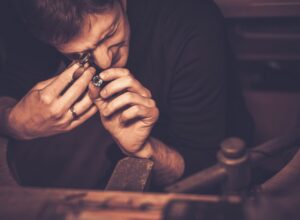
Why is there concern about lab-grown diamonds?
Jewellers and diamond wholesalers are concerned about synthetic diamonds entering the jewellery market, as they threaten to destabilise the well-established natural diamond market pricing structure.
Many jewellers have steered clear altogether, arguing that synthetic diamonds are not suitable for the emotional purchase of an engagement ring. These jewellers firmly believe diamonds should symbolise something rare and cherished, and that this ideology is not quite conveyed by something manufactured in a laboratory.
On the other hand, jewellery companies such as the diamond giant DeBeers have taken the front foot with the issue, attempting to create a clear distinction between the two products. DeBeers have release a budget friendly line of synthetic diamond jewellery named “Lightbox” which makes a clear statement that natural and lab grown diamonds do not belong in the same market.
Know the difference
The only sure-fire way to know what you are getting when it comes to lab-grown or natural diamonds is to make sure any diamonds you have purchased is graded so that you know exactly what you are paying for. There have been reports of natural diamonds being found in packets of synthetic diamonds and vice versa. If you are paying the premium for a natural diamond, then that is the product you are expecting to receive. The only way you can know for certain is to have a stone that has been graded by a certified diamond laboratory such as GIA.
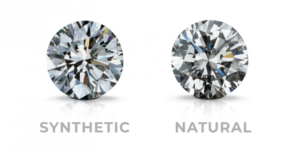
How are lab-grown diamonds made?
Synthetic grown diamonds are those formed in a factory or laboratory setting. Unlike natural diamonds (read about how natural diamonds are formed here), lab-diamonds are grown over a short period of time – usually a few weeks to one month. Despite some confusion, lab-grown diamonds are not an imitation like cubic zirconia or moissanite, as they are chemically and physically identical to a natural diamond.
Lab diamonds used in the jewellery industry are typically formed via one of two methods, High Pressure, High Temperature (HPHT) or Chemical Vapour Deposition (CVD). HPHT imitates the conditions that natural diamonds are formed, whereas CVD involves growing a diamond layer by layer in a chamber filled with ionised gas.
Advanced chemical testing is required to distinguish a diamond formed via HPHT or CVD from a natural diamond. Standard gem testing equipment such as refractometer, UV fluorescence lamp, binocular microscope and polariscopes are used to identify lab-grown diamonds.
A diamonds worth:
At the end of the day, consumers will make their own decisions on whether to purchase a synthetic diamond as a substitute for a natural diamond. The scarcity of natural diamonds and the value that they hold will not be diminished by synthetic diamonds as the two are separate markets. Concerns around mixing of natural and synthetic stones in the sorting process means that jewellers and consumers should only place more importance on primary stones only being certified by a reputable grading lab such as GIA. This is to protect both the consumer from unknowingly purchasing a synthetic as well as the reputation of a jeweller who may sell an uncertified diamond that turns out to be a synthetic.
The debate over synthetic vs natural diamonds is one that will continue to divide both the industry and consumers for years to come. While the majority see the value of a natural diamond and the beauty that they hold, synthetic diamonds are here to stay and will continue to integrate into the mainstream diamond market over time.
The post Lab Grown Diamonds Making a Mark on the Diamond Industry appeared first on Centrestone Jewellery Insurance.
]]>Deprecated: Creation of dynamic property WP_Term::$cat_ID is deprecated in /home/projectm/subdomains/centrestone-site/site/web/wp/wp-includes/category.php on line 378
Deprecated: Creation of dynamic property WP_Term::$category_count is deprecated in /home/projectm/subdomains/centrestone-site/site/web/wp/wp-includes/category.php on line 379
Deprecated: Creation of dynamic property WP_Term::$category_description is deprecated in /home/projectm/subdomains/centrestone-site/site/web/wp/wp-includes/category.php on line 380
Deprecated: Creation of dynamic property WP_Term::$cat_name is deprecated in /home/projectm/subdomains/centrestone-site/site/web/wp/wp-includes/category.php on line 381
Deprecated: Creation of dynamic property WP_Term::$category_nicename is deprecated in /home/projectm/subdomains/centrestone-site/site/web/wp/wp-includes/category.php on line 382
Deprecated: Creation of dynamic property WP_Term::$category_parent is deprecated in /home/projectm/subdomains/centrestone-site/site/web/wp/wp-includes/category.php on line 383
The post Fame and Fortune: the World’s Most Famous Diamonds appeared first on Centrestone Jewellery Insurance.
]]>The Blue Hope Diamond
Don’t be fooled by the name, it’s rather unlucky if the huge Blue Hope Diamond falls into your possession. Named after its owner from the 1930s, Henry Phillip Hope, the diamond acquire a reputation for bad luck while in his possession. Shortly after the British gem collector obtained the diamond, the Hope family fell into extreme debt and were forced to sell the 45.52-carat diamond. From that point onwards, it was believed that owners of the diamond will be struck with bad luck and misfortune. Today the Blue Hope can be found in the Smithsonian Institute’s National Museum of Natural History. It was last reportedly insured for a monstrous $250 million USD.
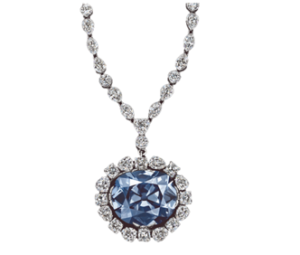
Figure 1: Blue Hope Diamond. Source: The Smithsonian Institute Website.
The Regent Diamond
They say money equal power. This can definitely be said for the Regent Diamond, which has a rich past involving a number of powerful historical figures. Famous owners of The Regent include Napoleon Bonaparte’s who had it set in the hilt of his sword. Discovered in India in 1698, it was purportedly stolen by a British governor of Madras from the slave who found it. The rough 426-carat stone was eventually shipped to England, where it took a total of two years to transform into the beautiful 141-carat Regent Diamond known today. In 1717 the stone was purchased by Philippe d’Orléans, regent of France where it acquired the name ‘The Regent’. It has since remained in the hands of the French royal family until recently where it went on display at the Louvre in 1887.
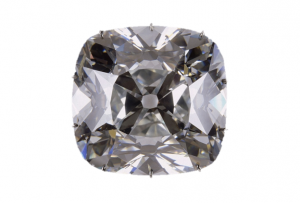
Figure 2: The Regent Diamond. Source: The Louvre Official Website.
Koh-I-Noor
The Koh-I-Noor, also known as the mountain of light, is one of the largest diamonds in the world weighing in at a hefty 105.6-carats. In addition to its incredible size, it also has one of the longest histories of any famous diamond with its narrative dating back to 1304. Over time it changed hands with various Mongol, Persian and Indian rulers before falling into the possession of the British Royal Family. The stone is said to bring its male owner’s great power at a cost. Nowadays only female members of the royal family wear the Koh-I-Noor as it is believed men who wear the diamond will be cursed with misfortune and an untimely death.

Figure 3: Koh-I-Noor set in Queen Mary’s crown. Source: The Crown Jewels of England (1919).
The Cullinan
The Cullinan is the largest gem quality rough diamond ever found. The 3106.75-carat stone was discovered in the Transvaal South Africa in 1905 and sparked public interest as it was 2-3 times larger than any diamond previously found. Despite several bids, the stone took 2 years to sell and was eventually purchased by the Transvaal Colony government as a gift for King Edward VII in 1908. The Cullinan Diamond was later cut into 9 major stones – the most famous being the Star of Africa.
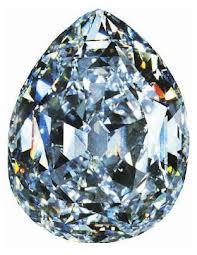
Figure 4: The Cullinan I: A smaller stone cut from the rough diamond. Source: Cullinan-Diamond Website
The Star of Africa
The Star of Africa is the largest stone produced from the Cullinan Diamond. The diamond can be found in the Tower of London among the Crown Jewels where it is set in the head of the British Sceptre. The stone is removable and can be paired with Cullinan II to form a brooch often worn by Queen Mary.
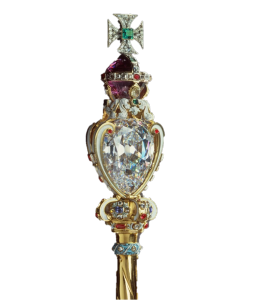
Figure 5: The Star of Africa set in the Royal Sceptre. Source: Cape Diamond Museum Website
The Excelsior Diamond
Prior to the discovery of the Cullinan Diamond, the Excelsior Diamond was the largest known uncut diamond ever found. Famous for its blue- white colour, the Excelsior weighed approximately 995-carat before it was later cut into 21 smaller stones. Three of these stones were purchased by none other than jewellery connoisseurs Tiffany & Co.
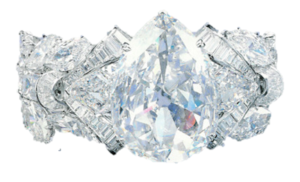
Figure 6: The Excelsior I set in a diamond bracelet.
Inspired by the world’s most sought after diamonds? Insure your most prized diamond in a matter of minutes. Click HERE to get a quote.
The post Fame and Fortune: the World’s Most Famous Diamonds appeared first on Centrestone Jewellery Insurance.
]]>